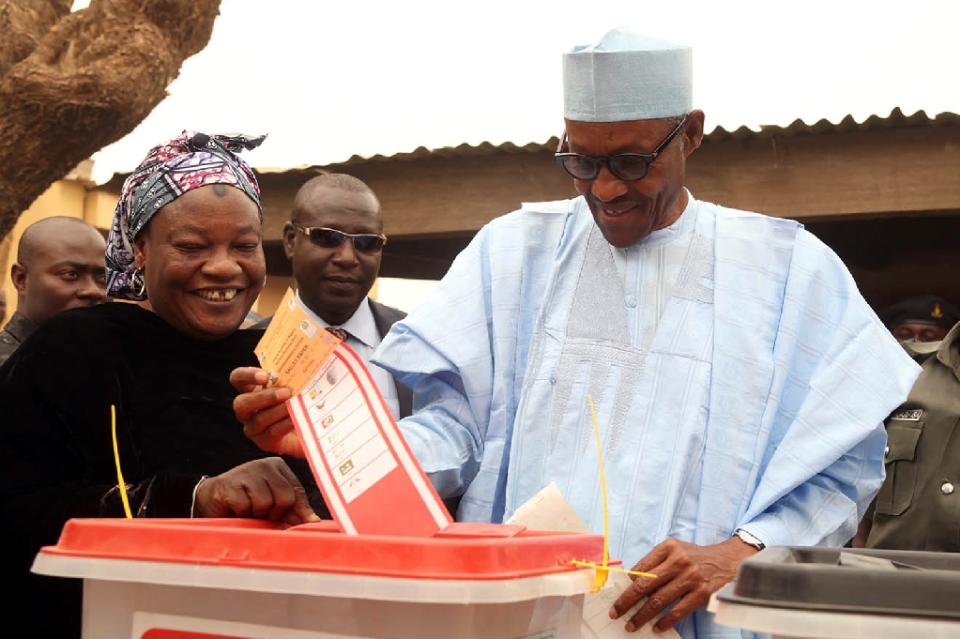
In less than three days, Muhammadu Buhari, will formally take over from Goodluck Ebele Jonathan as Nigeria's president. With the country reeling from a cash crunch and a crippling strike over fuel.
Buhari's
All Progressives Congress (APC) party accused President Goodluck Jonathan's
administration of sabotage for allegedly deliberately handing over the nation
in its worst state since independence 55 years ago.
"No
electricity, no fuel, workers are on strike, billions are owed to state and
federal workers, $60 billion owed in national debt and the economy is virtually
grounded," APC spokesman Lai Mohammed said.
But
across Nigeria, confidence is still high that Buhari, who headed a military
government in the 1980s, will fix the mess.
"It's
not in dispute that the Jonathan government has messed up things," said
rice trader Mulikat Bello in the Agege area of Lagos, Nigeria's financial
capital.
"We
know Buhari can do it. He has done it before. It's the same way the (Shehu)
Shagari administration destroyed the economy before Buhari's coup of December
1983," the 32-year-old added.
Thirty
years ago, Buhari's 15-month military regime was characterised by a hardline
crackdown against so-called "indiscipline" and corrupt practices,
which sometimes crossed the line into abuse of power.
As
Muhammadu Buhari formally takes over as Nigeria's president, the country is
reeling from a ca …
But he
has said things will be different this time round, with decades of military
rule abandoned since 1999 in favour of multi-party democracy, parliament and
the constitution.
In
February, the 72-year-old cautioned however that there was a need to
"temper high expectations on the part of those who are expecting miracles
to happen".
But
across the country many hope he can follow through on his election pledge of
sweeping change to stop the rot in Nigeria.
On a bus
from Oshodi to Agbado in the Lagos suburbs, unemployed 27-year-old university
accountancy graduate Solomon Abegunde said he expects the new administration to
create jobs.
In Kano,
northern Nigeria's biggest city, private security guard Awwalu Maidawa, 41,
wants an end to the Boko Haram insurgency which has claimed at least 15,000
lives since 2009.
Housewife
Hajara Sani hopes for investment in education, with 10.5 million children out
of school -- the most in the world -- and literacy levels low, particularly in
the Muslim north.
Musa
Mohammed, a 33-year-old auto mechanic, wants improved power supply, now at an
all-time low of just 1,327 megawatts -- below levels during Buhari's last time
in office.
Supporters
of Muhammadu Buhari celebrate his election victory in Lagos on April 1, 2015.
Lagos
beer distributor Abolaji Odumesi hopes to see Buhari tackle corruption in the
oil sector, which accounts for 90 percent of foreign earnings but is dwindling
due to falling global crude prices.
Elsewhere
there are calls to diversify the economy, increase taxation to boost government
coffers and tackle poverty that the APC says blights the lives of some 110
million of Nigeria's more than 170 million people.
Almost
everyone talks of corruption, which the austere Buhari believes has made the
country a global laughing stock.
"I
want him to maintain zero tolerance on corruption especially in the public
service and ensure that whoever is found wanting faces the full wrath of the
law," said Maidawa.
- High
hopes -
"One
of the first things he (Buhari) has to do is assemble a competent strategic
communications team to manage expectations," said political commentator
Chris Ngwodo.
"He
has to be able to temper the level of expectation but without being a damp
squib. It has to be skilfully managed."
To be
sure, Nigeria's military has the upper hand against Boko Haram but there is
still work to do to maintain the peace. On most other fronts, however, the
incoming government has an uphill task.
To tackle
the fuel crisis, Buhari, who once headed a government oil agency, has to
convince fuel importers holding out for claimed government subsidy arrears by
shutting depots, that they will be paid, said Ngwodo.
In the
longer term, he needs to tackle "the absurdity of an oil-producing nation
that imports fuel", build domestic refineries and eliminate fuel subsidies
that are open to corruption, he added.
"It's
a pity that Buhari has come at the wrong time," said Debo Adeniran, of the
Coalition Against Corrupt Leaders lobby group.
"The
Jonathan government has mismanaged the economy with a lot of baggage too heavy
for Buhari to carry.
"I
still cannot fathom how the incoming administration is going to get the funds
to implement its programmes."
On the
bus to Agbado, Abegunde is still confident. "To whom much is given, much
is expected," he said.
"Buhari
has no excuse to fail because we gave him our votes with the hope that he would
turn things around... We cannot continue like this. Things have to change.


No comments:
Post a Comment